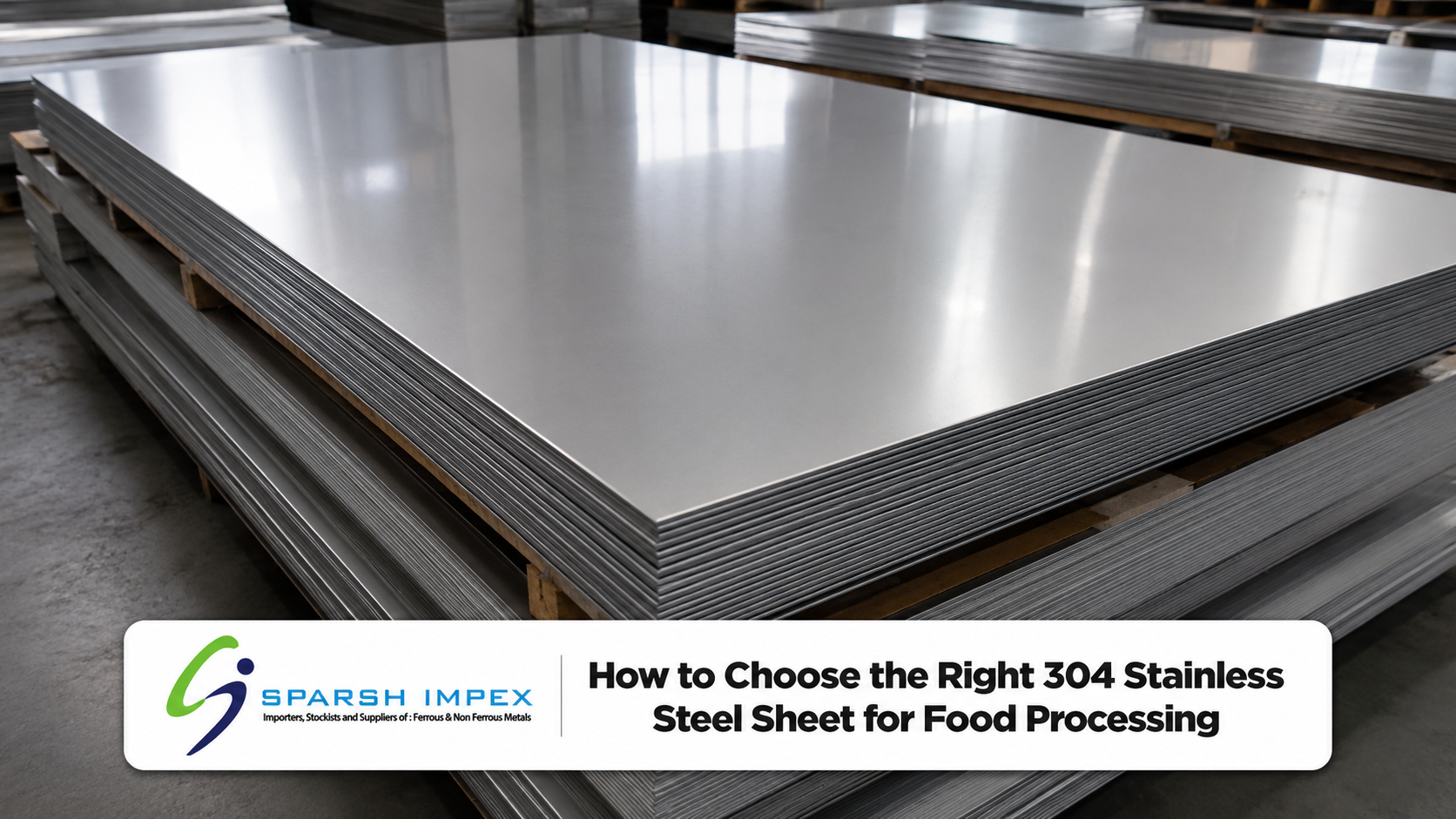
Picking the wrong plate material can affect a project significantly, whether you are working on a food processing unit, a structural framework, or an industrial pipeline. Two materials come up most often in procurement decisions: the Stainless Steel 304 Plate and the Mild Steel Plate. Both are widely used. Both have genuine strengths. But they are not interchangeable. Your choice depends on location, lifespan, and budget. This guide compares makeup, performance, cost, and uses to help you choose.
What is a Stainless Steel 304 Plate?
Composition and Properties
Stainless Steel 304 Plate contains roughly 18% chromium and 8% nickel. That combination is what gives it corrosion resistance. The chromium forms a passive oxide layer on the surface, which protects the metal from moisture and chemical exposure. It has high tensile strength, holds up under repeated stress, and is non-magnetic in its annealed condition. It also performs well at elevated temperatures, which matters in process industries.
Key Features of Stainless Steel 304 Plate
- Resistant to rust, oxidation, and most chemical environments
- Hygienic surface that is easy to clean and does not harbour bacteria
- Good formability and weldability with standard techniques
- Long service life with minimal surface degradation
Common Applications
Stainless Steel 304 Plate is widely used in food processing equipment, commercial kitchens, and pharmaceutical manufacturing, largely because of its hygienic surface and resistance to cleaning chemicals. Chemical processing plants use it for reactors, tanks, and piping. Architecturally, it is used in cladding, handrails, and structural features where appearance and longevity both matter.
What is a Mild Steel Plate?
Composition and Properties
Mild steel has a low carbon content, usually between 0.05% and 0.25%. That low carbon level is what makes it ductile and easy to shape. It bends without cracking, welds easily, and machines well. The trade-off is that it does not resist corrosion on its own and needs protective treatment in most environments.
Key Features of Mild Steel Plate
- Straightforward to fabricate, cut, and weld
- Lower cost than most other steel grades
- High machinability, works well with standard tooling
- Needs coatings, galvanisation, or painting to resist rust
Common Applications
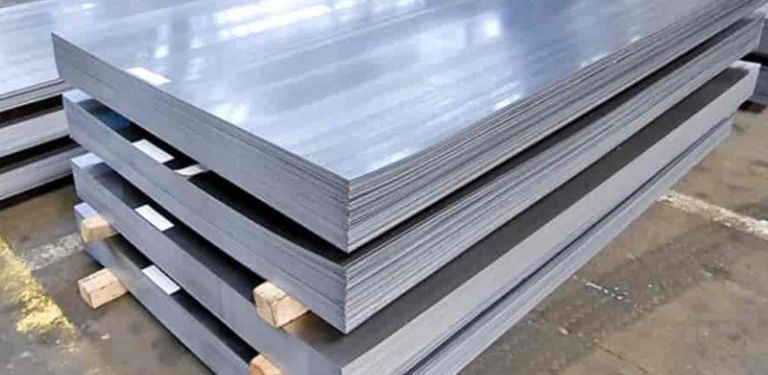
Mild steel is the standard choice for construction, structural frameworks, and civil engineering work. It is used in automotive body parts, machinery components, storage tanks, and pipeline systems where corrosion protection can be applied and maintained. In dry or well-controlled environments, it works well without the extra cost of stainless steel.
Stainless Steel 304 Plate vs Mild Steel Plate: Key Differences
Corrosion Resistance
Stainless Steel 304 Plate resists rust and corrosion without any surface treatment. Mild steel, by comparison, will begin to rust when exposed to moisture and air. In outdoor, coastal, or chemical-heavy areas, mild steel needs regular protective coating to keep working well.
Strength and Durability
Stainless Steel 304 Plate is stronger and keeps its strength for longer. Mild steel is strong enough for many structures, but in harsh or corrosive conditions, its life is shorter, even if it has protective coatings.
Cost Comparison
Stainless Steel 304 Plate costs more upfront, sometimes significantly so depending on thickness and quantity. Mild steel is more affordable at the point of purchase. That said, the cost difference can narrow over time once you account for maintenance, re-coating, and earlier replacement of mild steel components.
Maintenance Requirements
Stainless Steel 304 Plate needs very little maintenance. Periodic cleaning is usually enough. Mild steel requires regular inspection, repainting, or re-galvanising, especially in exposed or humid conditions.
Weldability and Fabrication
Both materials weld well using standard equipment. Mild steel is generally quicker and more affordable to fabricate because it machines more easily and the consumables cost less. Stainless steel needs extra care when welding to prevent bending and heat marks, but it is still easy to handle with the right method.
Aesthetic Appeal
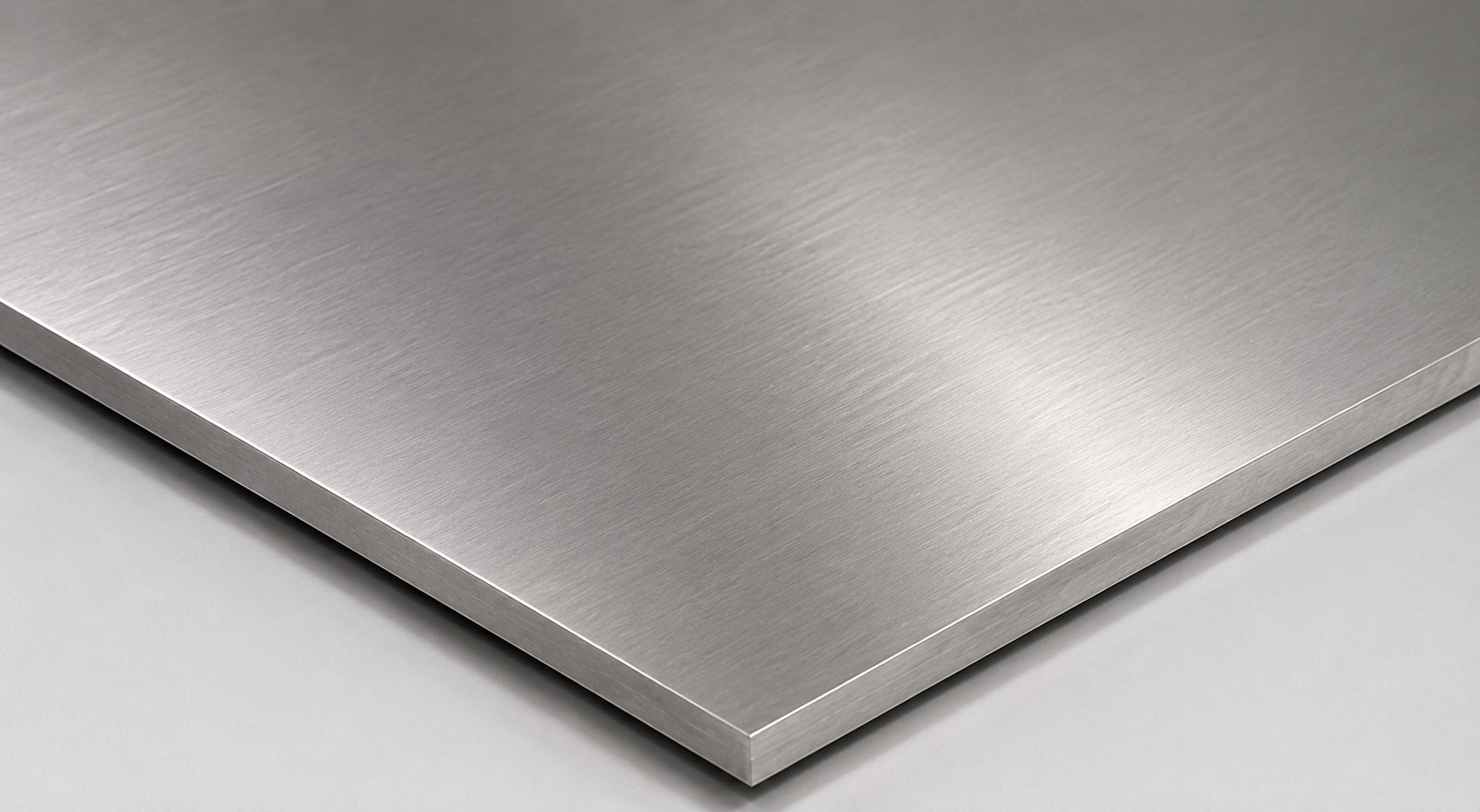
Stainless Steel 304 Plate has a clean, polished finish that holds up without any additional treatment. Mild steel needs painting or coating to look good and maintain that appearance over time.
Advantages of Stainless Steel 304 Plate
Its main benefit is strong corrosion resistance without needing any surface coating. It offers a longer service life in harsh environments, reduces maintenance costs, and is ideal for applications where hygiene matters. It also withstands high temperatures better than mild steel and maintains its surface appearance over many years of use. For applications that need all of these properties, it is the more reliable option.
Advantages of Mild Steel Plate
Mild steel is affordable and readily accessible. It’s easy to find in common sizes, simple to work with, and strong enough for structures where rust is not a problem. Its versatility across construction, machinery, and general engineering makes it one of the most commonly used metals in industry.
Disadvantages of Stainless Steel 304 Plate
The primary drawback is its higher upfront price. Stainless steel is also more difficult to machine than mild steel, which can increase time and costs in fabrication-intensive projects. In situations where corrosion resistance is unnecessary, this added expense can be hard to justify.
Disadvantages of Mild Steel Plate
Without proper protective treatments, mild steel can easily rust and corrode. Coatings add to the cost and require maintenance over the product’s lifetime. In wet, outdoor, or chemically active settings, the total cost of ownership can exceed that of stainless steel once repeated maintenance is factored in.
Factors to Consider When Choosing Between Stainless Steel 304 Plate and Mild Steel Plate
Environmental Conditions
Corrosive environments, coastal locations, and settings with chemical exposure require the Stainless Steel 304 Plate. Mild steel is a practical option in dry, controlled indoor environments where moisture is not a concern.
Budget Constraints
If the immediate budget is limited and the application is non-corrosive, mild steel is the sensible choice. For long-term installations where replacement and maintenance costs add up, Stainless Steel 304 Plate often works out to be the better investment over the full project lifecycle.
Application Requirements
Food, pharmaceutical, medical, and chemical applications should use Stainless Steel 304 Plate. Structural, construction, and general engineering projects that do not have hygiene or corrosion requirements are well-served by mild steel.
Maintenance and Lifecycle Cost
Initial purchase price is only one element of total cost. When comparing the two materials, you should also account for coatings, repainting, routine checks, and the risk of having to replace parts early. Over a 10–15 year span, stainless steel is the more cost-effective option in harsh or exposed conditions.
Which One Should You Choose?
Choose Stainless Steel 304 Plate if:
- The environment involves moisture, chemicals, or outdoor exposure
- Hygiene and surface cleanliness are a requirement
- Long service life with low maintenance is the key requirement
- The application is in food, pharmaceutical, or chemical processing
Choose Mild Steel Plate if:
- Budget constraints are the primary consideration
- The environment is dry and corrosion is not a concern
- The application is structural or construction-based
- Easy fabrication and availability are more important than longevity
Industry-Wise Recommendations
- Construction Industry: Mild Steel Plate is the preferred choice for structural frameworks and civil engineering work
- Food and Beverage Industry: Stainless Steel 304 Plate is required for its hygienic surface and resistance to food-grade cleaning agents
- Marine Applications: Stainless Steel 304 Plate is preferred because it withstands continuous contact with saltwater and moisture.
- Automotive and Machinery: Mild Steel Plate is suitable for these uses, with corrosion protection coatings added during the manufacturing process when necessary.
Conclusion
Stainless Steel 304 Plate and Mild Steel Plate are used for different needs. Stainless steel offers strong corrosion resistance, long-lasting performance, and is ideal for clean, hygienic settings. Mild steel, on the other hand, is more affordable upfront, easy to work with, and delivers dependable strength in structural uses.
The best choice of material depends on your exact application, the conditions it will operate in, and whether you value long-term durability or economical structural performance more. Sparsh Impex supplies both Stainless Steel 304 Plates and Mild Steel Plates across Mumbai and to customers worldwide. If you need support in selecting the right grades, specifications, or quantities for your project, our team is available to guide you.