The global construction and manufacturing sectors are seeing a massive rise in the demand for high-quality metal components. Engineers and buyers often compare stainless steel plate vs. sheet when selecting materials for structural or fabrication work. The confusion usually begins with thickness, strength, finish, and cost, which also play a key role. Understanding these differences ensures that the selected material meets specific load-bearing and environmental specifications. This blog delves into the unique qualities of each form, focusing on thickness standards, manufacturing procedures, and mechanical properties. This article compares stainless steel plate and sheet, providing the clarity required to make informed purchase decisions for industrial and architectural applications.
What Is a Stainless Steel Plate?
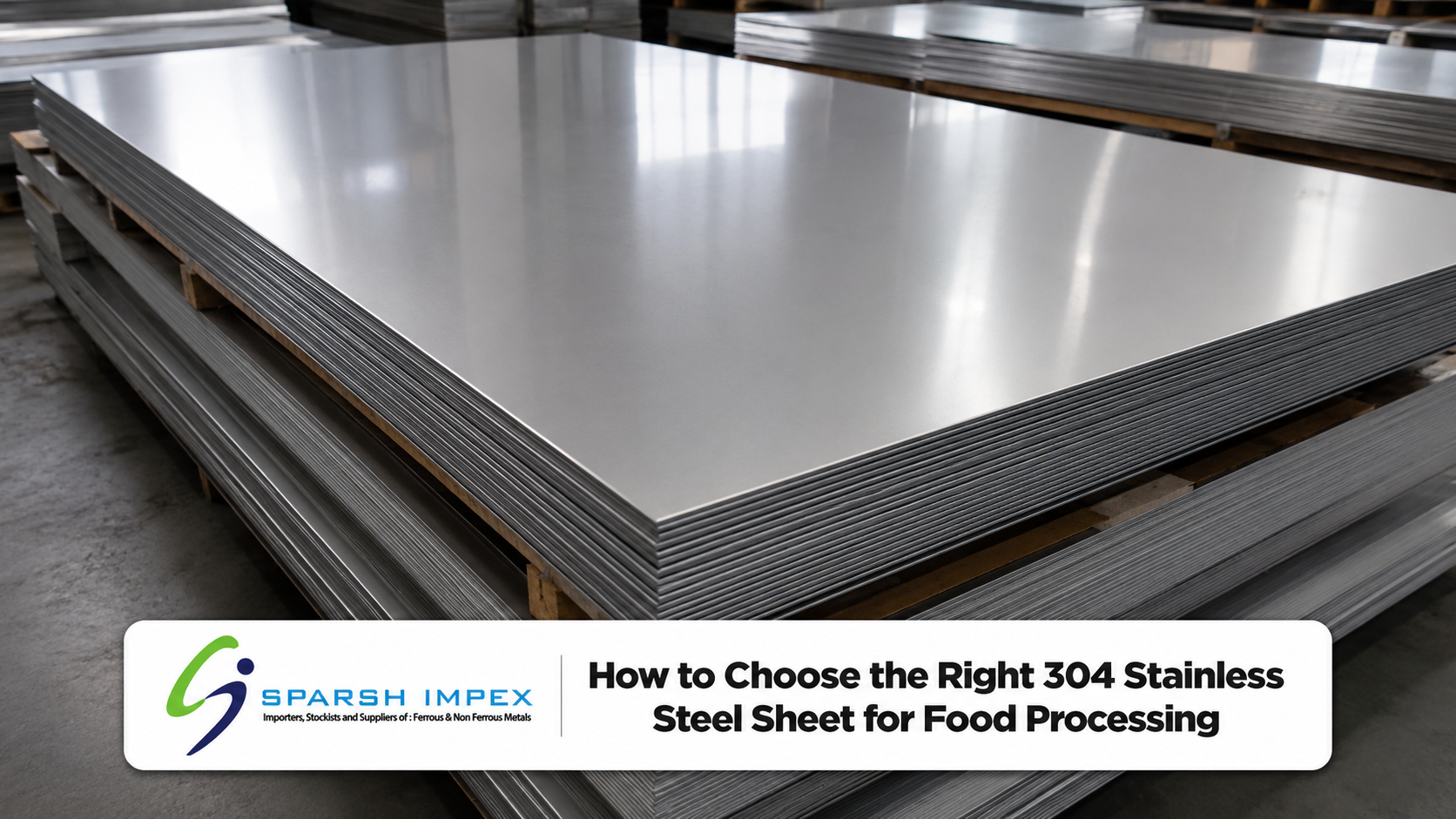
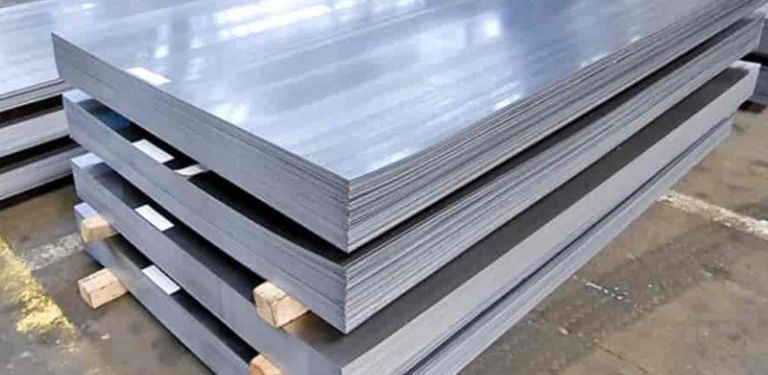
A stainless steel plate is a strong, heavy metal product mainly defined by its greater thickness. In the industry, any flat stainless steel piece thicker than 6 mm (or 0.25 inches) is called a plate. Plates are usually made by hot rolling, where the steel passes through rollers at high temperatures. This process creates a tough material with high strength and durability. Due to their thickness, these plates are used for performance in harsh situations more than for attractiveness. Common grades such as 304, 316, and duplex are often used to ensure corrosion resistance in heavy-duty applications. A stainless steel plate provides the necessary stiffness for foundations and large-scale industrial builds where thin materials would simply buckle under pressure.
What Is a Stainless Steel Sheet?
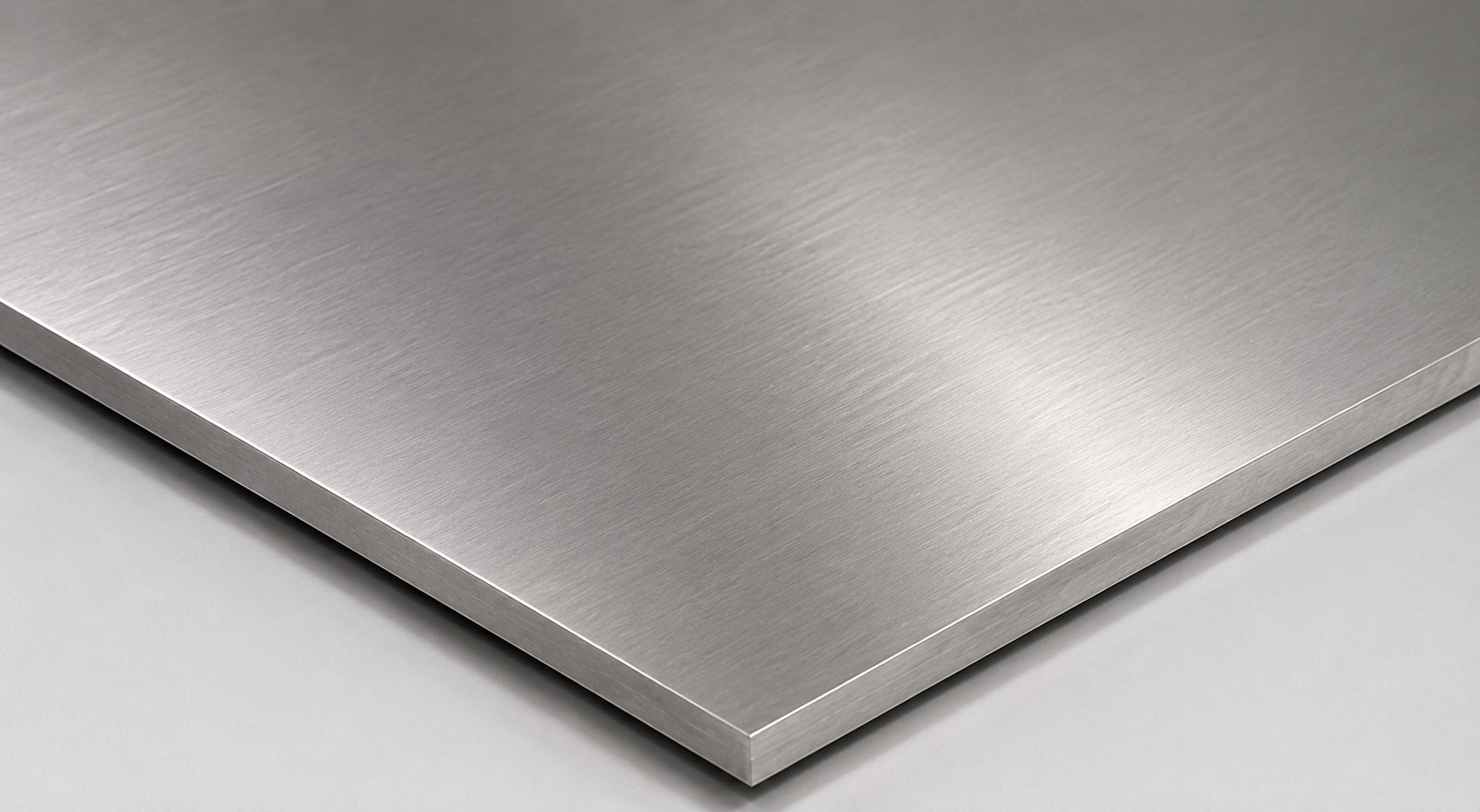
A stainless steel sheet is a thinner, more versatile version of the metal, typically measuring less than 6 mm in thickness. Compared to thicker sections, these are usually made by cold rolling, which gives them more accurate dimensions and a smoother surface finish. This makes stainless steel sheet ideal for uses where appearance and precision matter. These sheets are available in various surface finishes, such as 2B, BA, No. 4, and a high-gloss mirror finish. The key benefit of a sheet is its flexibility and adaptability, which enable it to be bent, sheared, or pressed into intricate forms without breaking. It is the preferred option for lightweight manufacturing requiring corrosion resistance without significant weight.
Key Differences Between Stainless Steel Plate and Sheet
While they look similar to the untrained eye, the technical differences between these two categories dictate how they behave under stress.
- Thickness Range: A stainless steel sheet is thin, usually ranging from 0.5 mm to 6 mm. Once the material exceeds 6 mm, it is officially classified as a stainless steel plate.
- Manufacturing Process: Sheets are mostly cold-rolled for a refined finish. Plates undergo hot-rolling to achieve greater thickness, often resulting in a duller, scaled surface.
- Strength and Load Capacity: Plates are designed to support heavy weights and resist high pressure. Sheets offer lower structural strength but provide excellent surface protection and lightweight coverage.
- Surface Finish Options: Sheets offer diverse decorative options like brushed or mirrored looks. Plates usually come in a standard mill finish because they are often hidden in structures.
- Cost Difference: Sheets are often priced by the piece or weight with a focus on finish quality. Plates are sold based on weight and the specific alloy grade required for strength.
- Typical Applications: Use sheets for kitchenware and trim. Use plates for bridges, storage tanks, and heavy industrial frames.
Comparison Table:
| Feature | Stainless Steel Sheet | Stainless Steel Plate |
| Thickness | Below 6 mm | 6 mm and above |
| Primary Process | Cold-rolled | Hot-rolled |
| Strength | Moderate | High (Structural) |
| Finish | Smooth / Decorative | Rough / Mill Finish |
| Formability | High | Low |
Strength and Mechanical Performance Comparison
When comparing stainless steel plate and sheet, mechanical performance matters most. A stainless steel plate can handle heavier loads and stronger impacts, which is why it is commonly used for structural support. The thicker plate can tolerate higher tensions and compressions without bending. In contrast, stainless steel sheet is used for easier welding and manufacturing. Sheets are strong for their weight, but they cannot withstand the same structural loads as plates. Plates are preferred for heavy welding applications that require extensive weld penetration to ensure a solid bond. Sheets are more commonly used in lighter structures that require only spot welding or delicate TIG welding. Choosing between them depends entirely on whether the project needs a skin or a skeleton.
Applications of Stainless Steel Plates
Plates are the workhorses of the metal world, used where failure is not an option.
- Structural Frameworks: Large buildings and bridges rely on heavy plates to provide a stable framework that can withstand environmental forces.
- Pressure Vessels: In chemical facilities, plates are welded together to make tanks that contain gases or liquids under very high pressure.
- Oil & Gas Equipment: Offshore rigs and pipelines use thick plates to withstand the corrosion caused by seawater and high-pressure oil flow.
- Heavy Machinery: Industrial presses and mining equipment require base plates made of strong steel to withstand the weight and durability that is required.
- Shipbuilding: Large vessels use plates for hull construction to ensure they can withstand the force of the ocean.
Applications of Stainless Steel Sheets
Sheets are found in everyday items and specialised equipment where a clean, light finish is required.
- Kitchen Equipment: Sinks, backsplashes, and commercial ovens use sheets because they are easy to clean and resist food acids.
- Decorative Cladding: Modern architecture uses thin sheets for building exteriors to provide a sleek look without adding excessive weight.
- Automotive Panels: Car exteriors and exhaust heat shields use sheets, as they are bent to make complicated, aerodynamic forms.
- Food Processing Equipment: Conveyor belts and sorting bins are built from sheets to keep them clean and last longer without the need to be washed often.
- Architectural Interiors: Elevator doors and wall panels often feature textured or colored sheets for a high-end aesthetic.
Standards and Specifications
Strict industrial standards like ASTM A240 and ASME SA240 help to maintain production consistency. These specifications consist of the chemical composition and mechanical properties that stainless steel plate and stainless steel sheet products must have. ASTM A240 is the most common standard, ensuring that the heat resistance and strength of the metal meet global safety norms. These standards also define thickness tolerances, which are much tighter for sheets than for plates. When ordering, checking for certification and traceability is vital. This ensures the material matches the mill test report (MTR). Proper documentation proves that the steel can handle the intended environment, whether it is a high-heat furnace or a corrosive marine setting.
How to Choose Between Stainless Steel Plate and Sheet
The decision hinges on the physical demands of the intended use and the final environment of the product.
- Thickness Requirement: Start by determining the minimum gauge needed. If the design calls for more than 6 mm for safety, a plate is the only option.
- Load and Strength Needs: Evaluate if the part will be a decorative cover or a weight-bearing beam. Heavy loads always demand the thickness of a plate.
- Surface Finish Importance: If the metal will be visible to customers, the smooth finish of a stainless steel sheet is usually preferred over a rough plate.
- Budget Considerations: When it comes to the budget, sheets may be more affordable for large areas, but plates are a better value when one needs something that will last a long time in harsh conditions.
- Project Type: Plates are used for stability in structural projects, while sheets are commonly used in decorative or precise manufacturing projects, as they are easy to work with.
Conclusion
Understanding the nuances of stainless steel plate vs. sheet is essential for any successful engineering or construction project. The primary difference lies in thickness, with 6 mm acting as the dividing line that dictates strength and manufacturing methods. A stainless steel plate offers high strength, which is required for heavy-duty industrial projects and structural supports. Stainless steel sheets, however, offer the flexibility and attractive finish needed for consumer products and architectural designs. Choosing the right form helps ensure the final result is both safe and cost-effective. Always ensure that the materials meet the international standards.